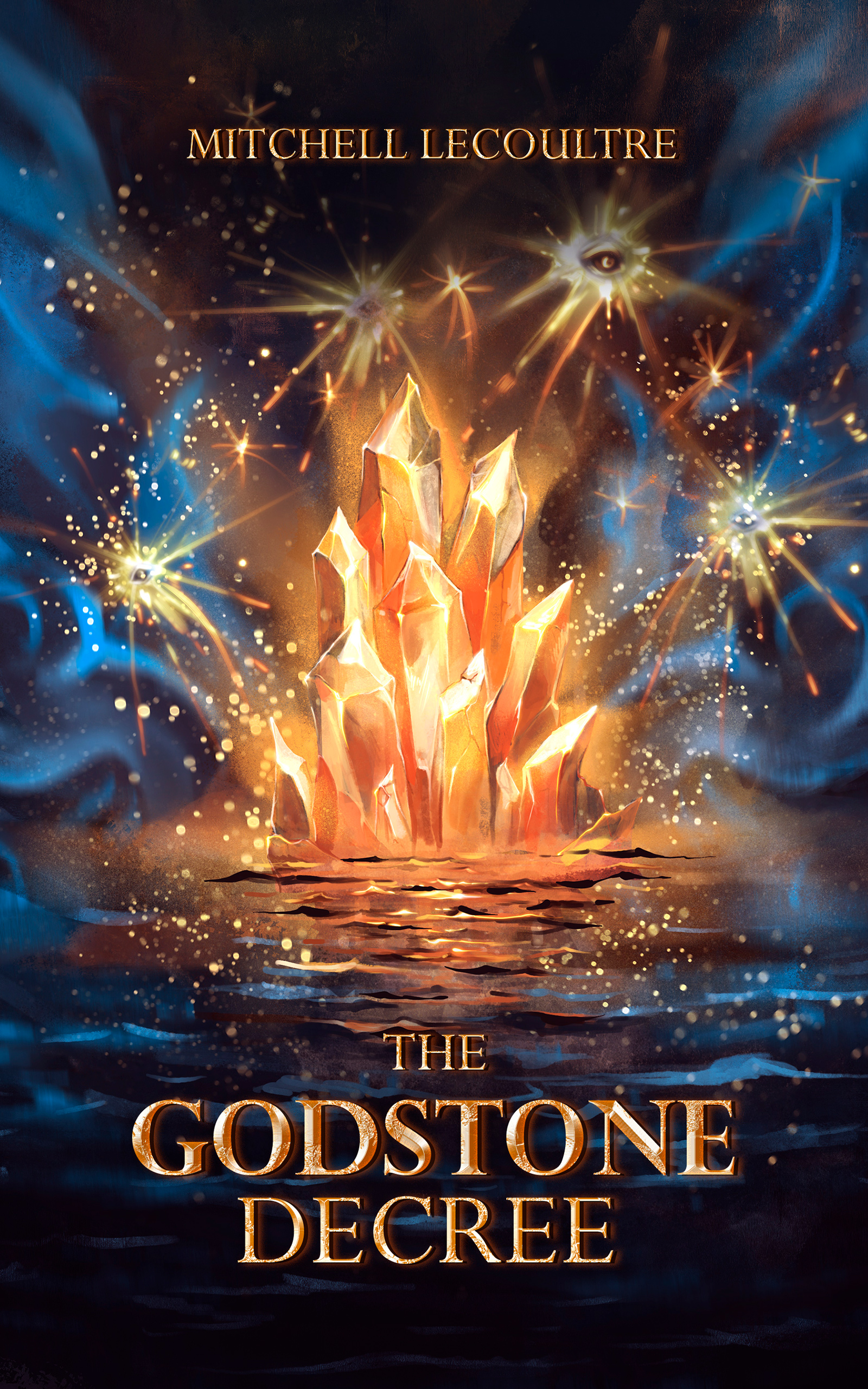
In my quest to make sure my latest novel, The Godstone Decree, has a modicum of grounded reality to it, I have stumbled across some pretty interesting facts. Little fun trivia bits that fly in the face of reason. Now, I want you all to keep in mind that this is a fantasy novel, but hey, why can’t fantasy have a little bit of believability to it? I mean, look at Game of Thrones, those novels have believability bursting out of their seams; that is, between the incest and the mutilations. Of course, I didn’t set out to write the Game of Thrones but if you are going to make a world—fantasy or no—it needs to have rules.
Sometimes those rules seem to fly in the face of logic, and sometimes the most egregious logic breakers exist right in our own history; in our own world. Now I am not a historian, that’s not my profession, but as far as Wikipedia and a moderate chasing down the rabbit hole (e.g. click on the source links provided and make sure they’re legitimate) are concerned I have found some rather weird and some rather unbelievable facts. Little tidbits that even my beta readers are second guessing. So, come with me as I share just a few with you.
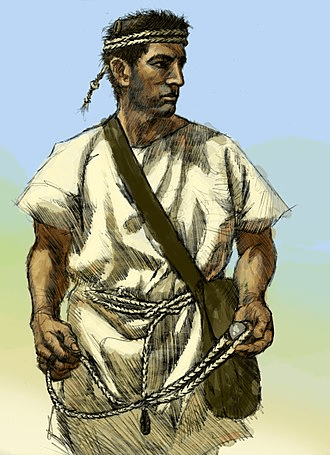
Let’s start with my favorite. Did you know that ancient slingers could outrange ancient bows? Makes me think back on the age-old tale of David vs. Goliath? How the meek overcame the strong. Well, apparently, David was using the pinnacle of projectile weaponry at the time. That might have helped a bit. Now before you lambast me for blasphemy or what have you, I am just pointing out how the sling has been forgotten in our popular conception of the past. Apparently, slingers were very much a force to be reckoned with, and, according to some, it wasn’t until the 15th century before the sling was no longer viable (Slingers).
They were—by many accounts—simply a better weapon for most of the Ancient and Classical era. I know, I know, I was just as flabbergasted as you, but apparently the sling could fling stones up to 400 meters! Now, that’s an insane distance. That’s nearly a quarter of a mile! I can’t imagine the accuracy at that range is anywhere near perfect, but, when you’re lobbing rocks at a mass of people, do you really need to be that accurate? This claim is backed up by ancient era writers. One of which, a sour fellow named Xenophon, laments the losses of his army against the Persians. He specifically mentions how arrows and javelins were basically useless against the Persian slings.
Maybe we could add a bit to David and Goliath’s story: bringing the best tools to a fight can help you overcome impossible odds? That preparing for a seemingly impossible encounter might give you some chance of success? Nah? Ah well, I tried.
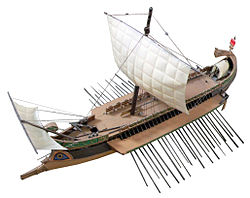
If that didn’t blow your mind, listen to this! Did you know that ancient Romans were terrible sailors? Well, maybe not terrible but they definitely were not known for being nautical ninjas. Yeah, it turns out that that one Mediterranean empire that spanned most of the known world and is ubiquitous with the term empire was not known for their seamanship. In fact, it would seem that they were so outmatched as far as sailing skill that they made an invention known as the ‘Corvus’ which was essentially a draw bridge at sea (Rome). Pull your boat alongside an enemy vessel, drop it onto said enemy vessel, and proceed to have a land battle at sea; something the Romans were very—VERY good at.
Don’t even get me started on the crazy science behind wooden ship building. Clinker vs carvel straking, flat bottom keels (hello every medieval boat being essentially a landing craft), and the craziest bit of all? The amount of different ‘remes’ there are. You got your bireme, your trireme, your quadrireme, and quinquereme, it just keeps going up and up to the point that there surely was one mad bastard that made a decireme.
Speaking of mad bastards, I am probably on an FBI watchlist now. After all, I did look up the varying states of decomposition of a human body based on timeframe. What?! I wanted—no needed—to know when rigor mortis would set in. I can’t have a person investigating a murder and the timelines not make sense. What you think this is, a fantasy novel!?
You don’t get a picture of this one! Sorry, that might put me on an even bigger watchlist.
And like any good novel there are always strong characters to the story; sort of ‘key players’ as you will. And let me tell you, whoever decided to name the varying stages of death got one thing definitely right about characters—the names. That’s right, no longer will you be locked in with the thought that there is just rigor mortis (stiffness of death). No, now you will know that there is also algor mortis (temperature of death) and my favorite livor mortis (color of death). Anybody ever remember the movie ‘Seven?’
“What’s in the box?”
Well, if that movie stuck with you like it did me, you may remember the sin of gluttony and how Morgan Freeman tells ol’ Brad how the victim has been dead for a while. How do they know that besides movie magic? Livor mortis! That’s right, the purple discoloration that happens at the bottom of corpses is from livor mortis. Essentially the blood settles towards gravity, causing a sort of bruising that is very obvious, and very rigid in its timeframe since death (https://coronertalk.com/28/). Cool, right?
Obviously, any coroners out there feel free to correct me if I’m wrong. Just like how I’m not a historian, I don’t work at a morgue either.
Well, that’s that. Those are just some of the crazy facts I learned while researching for my latest novel. I wanted to share these wacky little bits with you, because, yes, a beta reader seriously doubted that a sling could outperform an ancient bow. But, at least according to Wikipedia and the sources located there, that little piece of rope and rock could. I guess the lesson is: never underestimate the little guy.
Thanks for reading and have a wonderful day!
The sources I mentioned, if you want to have a look!

Leave a comment